Truth, Ovals and the Un-Built: A Major Retrospective of Artistic Jack-of-all-Trades Georges Vantongerloo

by thelowcountries 21. January 2010 09:54

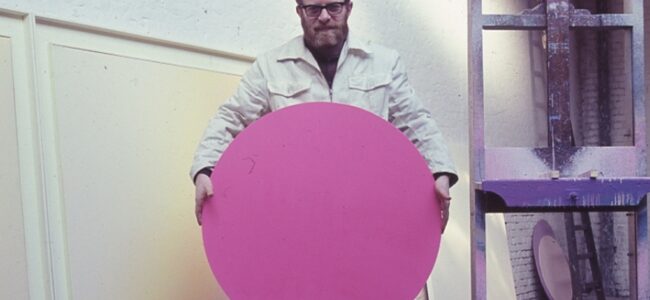
A special exhibition of the work of the Belgian abstract sculptor and painter Georges Vantongerloo (1886-1965) will be opening at the The Hague Gemeentemuseum this Saturday. It was already hosted at the Lehmbruck Museum in Duisburg (Germany), and in a way it’s a pretty unique and remarkable event. A bit of a piquancy, actually, since no exhibition of Vantongerloo’s work was ever to be held in the Netherlands according to the terms of his will.

De Stijl
Vantongerloo spent time in The Hague as a refugee during the First World War, where he befriended Theo van Doesburg, Bart van der Leck and Piet Mondrian. In 1917 he joined the ranks of the De Stijl movement and the associated magazine. At this time he relinquished his former figurative style and switched to purely geometrical abstract compositions. He morphed into an artistic jack-of-all-trades: painter, sculptor, designer, architect, but also a theoretician and art critic who once wrote about his own work and his unwillingness to be either a crowd-pleaser or a fashionable slave to success: "I work in and for truth". He was also a bit of a recalcitrant within De Stijl (from which he broke away in 1921), as he defied the austere authority of the straight line by his frequent use of circles and ovals. Later on he would settle in France where he became the co-founder of the cosmopolitan Abstraction-Création movement in 1931. A few years later, he would be part of the 1936 Cubism and Abstract Art exhibition at the Museum of Modern Art in New York.


Forgotten
A major retrospective of Vantongerloo’s work was on show in 1962 at the Marlborough New London Gallery, but he fell into oblivion over the years for a number of reasons. His infrastructural designs for airfields, bridges and housing estates, for one, were never executed. But the people from Duisburg and The Hague who assembled the exhibition are correct in their opinion that as one of the founding fathers of geometrical abstraction and constructivism he fully deserves this fresh accolade.

Incidentally, this exhibition does not only have work by Vantongerloo on display, but also pays attention to contemporaries such as Max Bill and Mondrian. The exhibition in The Hague runs until May 16.

[Illustration: Georges Vantongerloo, Study, 1920. Oil on canvas, 52 x 61.5 cm]

Dutch studies in the spotlight at the MLA conference

by thelowcountries 20. January 2010 10:11
Between Christmas and New Year, thousands of scholars working in the field of language and literature met at the annual Modern Language Association's conference in the United States. With 767 different panels, each offering up to four presentations, this year’s conference in Philadelphia was no exception to the spectacular dimensions of the MLA. As a proud David facing the English, Spanish and Chinese Goliaths, Dutch Studies was represented by the Discussion Group on Netherlandic Language and Literature. This year’s theme, "Collaboration and Resistance in Netherlandic Literature", organized by Peter J. Schwartz (Boston University), drew considerable attention, particularly by colleagues from German Studies.

Honorable mention
Besides its successful panel, Dutch Studies has another reason to look back upon the 2009 MLA conference with satisfaction. Dutch Crossing, the leading English academic journal in Low Countries Studies, received an honorable mention in the Phoenix Award for Significant Editorial Achievement. Published since 1977, Dutch Crossing is an interdisciplinary peer-reviewed journal devoted to all aspects of Low Countries Studies: Dutch language and literature, history and art history of the Low Countries, the social sciences and cultural studies, and Dutch as a foreign language. Coverage includes both the Netherlands and Flanders, as well as other places where Dutch historically had or continues to have an impact, including parts of the Americas, South Africa and Southeast Asia. A special focus of Dutch Crossing concerns relations between the Low Countries and the English-speaking world. The journal’s editor Ulrich Tiedau (University College London, UK) traveled to Philadelphia to personally receive the prestigious award by the Council of Editors of Learned Journals. The award is a well-deserved tribute to both the editorial and publishing team’s work to produce a journal that has increased considerably its academic importance since it is managed by Maney Publishing.

Send abstracts
The next MLA Conference will be in early January 2011 in Los Angeles. Scholars who are interested to represent their university at the world’s biggest conference in the field of language and literature, can send abstracts about any topic related to Netherlandic and Netherlandophone Language and Literature to Bettina Brandt (Montclair State University), organizer of the 2011 Discussion Group on Netherlandic Language and Literature: brandtb@mail.montclair.edu.

"The Bulletin" Reborn

by thelowcountries 15. January 2010 13:01
The current recession gnaws mercilessly at the printed media. Now it has urged the Brussels weekly The Bulletin to reshuffle its deck of cards: as from january 2010 it became a monthly magazine, and a weekly listings magazine Brussels Unlimited was added. Both magazines will continue to cover Brussels and Belgium. Their aim is to meet more effectively the needs of the large international community that lives and works in the capital of Europe.

Europe
Global issues now surface in the magazine: a reporter travels by minibus to the outskirts of Europe to find out why the Roma have fled their homelands to seek a better life in Belgium and how their hopes are all too often dashed once they arrive here. Europe, of course, remains the horizon of many articles: a young and feisty Swedish punk MEP who’s quite literally the new kid in town is being interviewed.

The many dimensions of Belgium and Brussels
As Derek Blyth, Editor-in-chief, puts it: "The aim of the new Bulletin is to encourage the very best of writing from Brussels on the many dimensions of this country, from the serious political stories to the fun stuff that makes Belgium such a rewarding place to live."

The Power of Print
And he adds: "We still believe in the power of the printed word as a means of communicating ideas and constructing community." Hear, hear & Amen to that.

We wrote in hell, they called it Passchendaele

by thelowcountries 14. January 2010 13:30
Flanders Today, Independent Newsweekly, announces the solo drama My Grandfather's Great War of the British actor Cameron Stewart.

A Mother's Wish
When he was a little boy, his mother told him to do something with his grandfather's First World War diaries. Cameron eventually did what his mother asked him to do. He premiered My Grandfather’s Great War at the Edinburgh Festival in 2008. The Daily Telegraph called it "A simple, honest tribute by one man to his grandfather" and said the piece "brings home the mud, terror and physical agony of the Western Front with a visceral urgency that sets your heart racing". Flanders is Stewart's first stop on an international tour.

"I abhor war"
The solo drama interweaves the diaries of Captain Alexander Stewart with the contemporary perspective of his grandson, the actor Cameron Stewart: "I’m rather torn because I have an awful lot of respect for soldiers and especially for my grandfather…but I abhor war."

Heirloom
The diaries of Alexander Stewart remained a family heirloom for 70 years. Cameron Stewart read some excerpts on the Today programme of BBC Radio 4 in 2008. That was the start of their expanding popularity. The diaries were published as A Very Unimportant Officer (Hodder & Stoughton, 2008). "The prose is sensitive, informative, anecdotal. Britain fell in love with it", says Lisa Bradshaw in Flanders Today

Cameron Stewart will perform from 22 till 24 January at The English Theatre of Bruges. All practical information can be found here.

Death of a Reluctant Heroine: Miep Gies, saviour of Anne Frank’s diary, passes away

by thelowcountries 13. January 2010 08:57
On January 11 Miep Gies died. Almost 101 years at the time of her demise, Miep Gies was born in Vienna as Hermine Santrouschitz. At the age of 11 she was adopted by a family in Leiden who moved to Amsterdam later on. This adoption was part of a national action that brought thousands of mostly underfed Austrian children to the Netherlands to convalesce.

Miep and Anne Frank
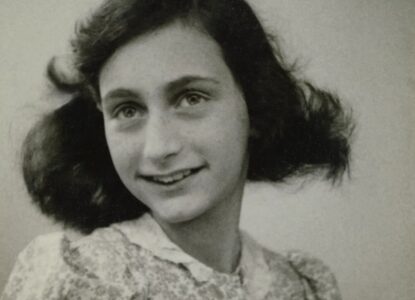
Hermine (Miep) Gies-Santrouschitz found a job as a secretary in Opekta, a company owned by Otto Frank, father of the now so famous Anne Frank, when she was 24.When the family Frank (together with some other Jews) had to go into hiding in the Achterhuis (denoting the hidden back rooms of Otto Frank's office building), Miep Gies, together with other employees of the company, was instantly prepared to supply them with food and news, at the risk of her own life.

The Diary
Upon the discovery and deportation of the family, Gies was questioned and threatened by the Security Police. She returned to the Achterhuis the following day, only to find Anne's papers strewn all over the floor. They turned out to be the famous diary of the girl.

"Het Achterhuis"
Gies returned the diary to Otto Frank after the war. He was the family’s sole survivor, of the Holocaust, and had the diary published in 1947 as Het Achterhuis (The Diary of a Young Girl, 1952). A 1959 film version of this publication, directed by George Stevens, won three Academy Awards and was nominated for best picture. Last year it was reported that David Mamet would write and direct a new Anne Frank film. His script will combine the original diary with the stage play written by Albert Hackett and Frances Goodrich and new material from Mamet himself.

Not enough
Miep Gies used to refer to what she had done with the laconic words: "I did what I could. It wasn’t enough." Which fits in perfectly with the motto on her own website: "I am not a hero but did what seemed necessary at the time".

First They Took Edinburgh, now They Take New York: Ontroerend Goed abroad

by thelowcountries 11. January 2010 13:33


In august 2009, the youthful Flemish Theatre Company Ontroerend Goed had a successful stay at the Edinburgh Fringe Festival, as you can read here.
This week, Ontroerend Goed play at the Under the Radar Festival in New York. Their piece Once and for All We're Gonna Tell You Who We Are So Shut Up and Listen had its première last Thursday and got very nice reviews. You can read the New York Times' review here.

Once and For All is playing through 17 January in New York at The Duke on 42nd Street.

Royal Concertgebouw Orchestra to make regular appearances in London, Paris and Brussels

by thelowcountries 7. January 2010 11:38

The Royal Concertgebouw Orchestra (RCO) from Amsterdam (photo), which was proclaimed the best symphony orchestra in the world by international music critics at the end of 2008, will very soon make regular appearances in the most important concert halls in London, Paris and Brussels. The RCO played concerts in these cities in the past, too, but as of next season they will acquire a structural character.

Structural character
The RCO plays ninety concerts a year in the Amsterdam Concertgebouw and the main Dutch cities. Besides these there are some 35 performances abroad. The very first tour was to Bergen, in Norway, in 1898. Until the 50s of the previous century tours were limited to a few concert trips per season. After that they increased steadily. Because, on the one hand, requests from abroad continue to grow and, on the other hand, they are becoming increasingly successful, a decision has been made to give the RCO’s positioning on the international stage a more structural character.


London
In London this will take the form of a long-term partnership agreement in which other foreign orchestras will also participate and will entail performances at the Barbican Centre.

Paris and Brussels
As of the 2010/2011 season the orchestra will enter into a four-year arrangement with the Pleyel hall in Paris and the new Philharmonie hall, which is currently under construction, for two or three concerts a year. In Brussels the RCO will perform two concerts per season for three years, starting from 2010/2011, in Bozar.

The activities in these cities will not be limited to concerts, though. Chamber music performances, master classes, workshops and educational projects will also be organised. 


A new Foundation is born: Dutch Foundation for Literature

by thelowcountries 6. January 2010 09:26

From today onward, the Foundation for the Production and Translation of Dutch Literature (NLPVF) and Fonds voor de Letteren (Literature Fund) will be known as a single new foundation: the Dutch Foundation for Literature.

Support
As of 1 January 2010, the legal merger between the literary foundations can be regarded as an accomplished fact. The two executive committees have been combined to form a single board of administrators. The most important step in the fusion process has been taken. The new foundation will continue to cope with the regular tasks of both foundations: supporting writers and translators on the one hand, and the promotion of Dutch literature abroad on the other.

Policy
Thanks to backing from the Dutch Ministry of Education, Culture and Science, the Foundation can direct its efforts with renewed vigour to international translation policy, non-fiction policy (both original and translated) and new developments in literature and the book profession. The next months will be used to mould the two organizations into a single one, to formulate new regulations, to occupy new premises in the historical centre of Amsterdam, to develop a new corporate style for printed matter and to create a new website.

One single organization
As soon as the fusion is accomplished, the Netherlands will, just like Flanders, dispose of one single organisation for writers, publishers and translators.
The Vlaams Fonds voor de Letteren (Flemish Literature Fund) was created in 1999.


Information

NLPVF
www.nlpvf.nl

Fonds voor de Letteren (Literature Fund)
www.fondsvoordeletteren.nl

Dutch Foundation for Literature (Nederlands Letterenfonds)
www.letterenfonds.nl

A theology of the people. Edward Schillebeeckx dead

by thelowcountries 5. January 2010 13:52


The Flemish theologian Edward Schillebeeckx, who was active in the Netherlands, died at the end of December aged 95 (photo). Schillebeeckx was born in Antwerp in 1914, the sixth child in a family of fourteen. Educated by the Jesuits henonetheless opted for the Dominicans. He studied philosophy in Ghent and theology in Leuven and Paris. He remained Belgian even after moving into the Albertinum, the Dutchheadquarters of the Dominicans in Nijmegen,in late 1957, where he became a professor. He stayed there after his retirement in 1983 and died there on 23 December 2009.

Reform
For decades Schillebeeckx played an important role in the reform of the Church and theology. He was an advisor to the Dutch bishops during the Second Vatican Council in Rome (1962-1965). His most important books were published in the seventies and eighties - books like Jesus. An Experiment in Christology (London, 1979; New York, 1981), Christ. The Christian Experience in the Modern World (London, 1980) and Church. The Human Storyof God (New York, 1990).  They were a source of inspiration to a large audience of readers. His eminent knowledge of the Christian tradition was coupled with a passionate commitment to the Church and society. Schillebeeckx took a critical stance towards the ideologies with which positions of power inthe church and society are legitimised and change blocked. The focus of his theology is man at the centre of creation. God himself is a pre-eminently humane God intent on man’s salvation: ‘Deus humanissimus’. He reveals himself in and through people.

Justification
Schillebeeckx was called to account several times by the Congregation for the Doctrine of the Faith in Rome, in particular for his views on Jesus, the priesthood, the role of the laity in the Church and the separation of priesthood and celibacy. Schillebeeckx also insisted frequently that knowledge of God’s reality could not be exhausted within one single religious tradition. He dutifully obeyed the summons and defended himself brilliantly in Rome. The theologian was never convicted. For all his criticism of its structures he remained faithful to the Church.

Schillebeeckx in Ons Erfdeel, Septentrion and The Low Countries
Schillebeeckx himself wrote a detailed essay on the Catholic Church in the Netherlands for the first issue of Septentrion in 1972. In 1983 Herman-Emiel Mertens wrote an article about his Christian humanism in Ons Erfdeel and in 1996 he did so in The Low Countries. 

Back from the USA. Judith Leyster, Grande Dame of the Golden Age, on Show in Haarlem

by thelowcountries 11. December 2009 21:54

Judith Leyster, Self-Portrait (1632-1633). National Gallery of Art, Washington D.C

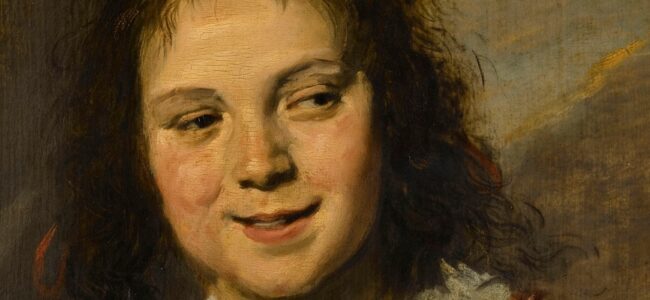
Next Saturday (December 19) the Frans Hals Museum in Haarlem presents a Judith Leyster exhibition on the occasion of her 400th anniversary. Leyster (1609-1660), the daughter of a brewer and clothmaker, was probably the first woman in the western world to be designated a 'master painter': as early as 1633 she became a  member of the St Luke painters' guild in her native Haarlem. This allowed her to open up her own workshop and accept apprentices.

Leyster's work was clearly influenced by the paintings of Frans Hals, for whom she was a significant competitor. Like Hals, Leyster had a remarkable knack for painting portraits and composing lively scenes of people drinking in taverns, merry folks playing music, and frolicking kids and the like. She was also inspired by Rembrandt to try her hand at some innovative lighting effects.

Although well known during her lifetime, Leyster and her work were largely forgotten after her death until 1893, when a painting acquired by the Louvre was found to have Leyster's distinctive monogram (her initials entwined with a five-pointed star) hidden under a false signature reading 'Frans Hals'. This discovery led to renewed research and appreciation of Leyster's oeuvre, which had previously been confused with that of Hals.

In 1636 she married the painter Jan Miense Molenaer, and being a wife (and mother) clearly had its disadvantages. Her artistic output decreased dramatically and hence the body of work she left is pretty much limited to 48 paintings ascribed to her. Twelve of them have never been traced and another seven are heavily disputed. The Haarlem exhibition will have some 10 major paintings from Leyster's oeuvre on display, the centre piece being her Self-Portrait (1632-33). These paintings were culled from museums and private collections in both Europe and the US.

Incidentally, earlier this week a new - heavily damaged - flower still-life by Leyster has emerged at the Frans Hals Museum. Its signature ('Ju(...)molenaers 1654') seems to indicate that housework didn't keep her away from the easel all of the time.

The Judith Leyster exhibition will be on display until May 9 in Haarlem and is organised in collaboration with the National Gallery of Art in Washington, which hosted the exhibition earlier this year.
For a pictorial survey of Leyster's works and information on their present whereabouts, go
here.


Yearbook 'The Low Countries'

The Low Countries 

With The Low Countries, a yearbook founded by Jozef Deleu (Chief Editor from 1993 until 2002), Ons Erfdeel vzw aims to present to the world the culture and society of Flanders and the Netherlands

The Low Countries

The Low Countries
Yearbook no. 17, 2009 (out on April 28)